Introduction
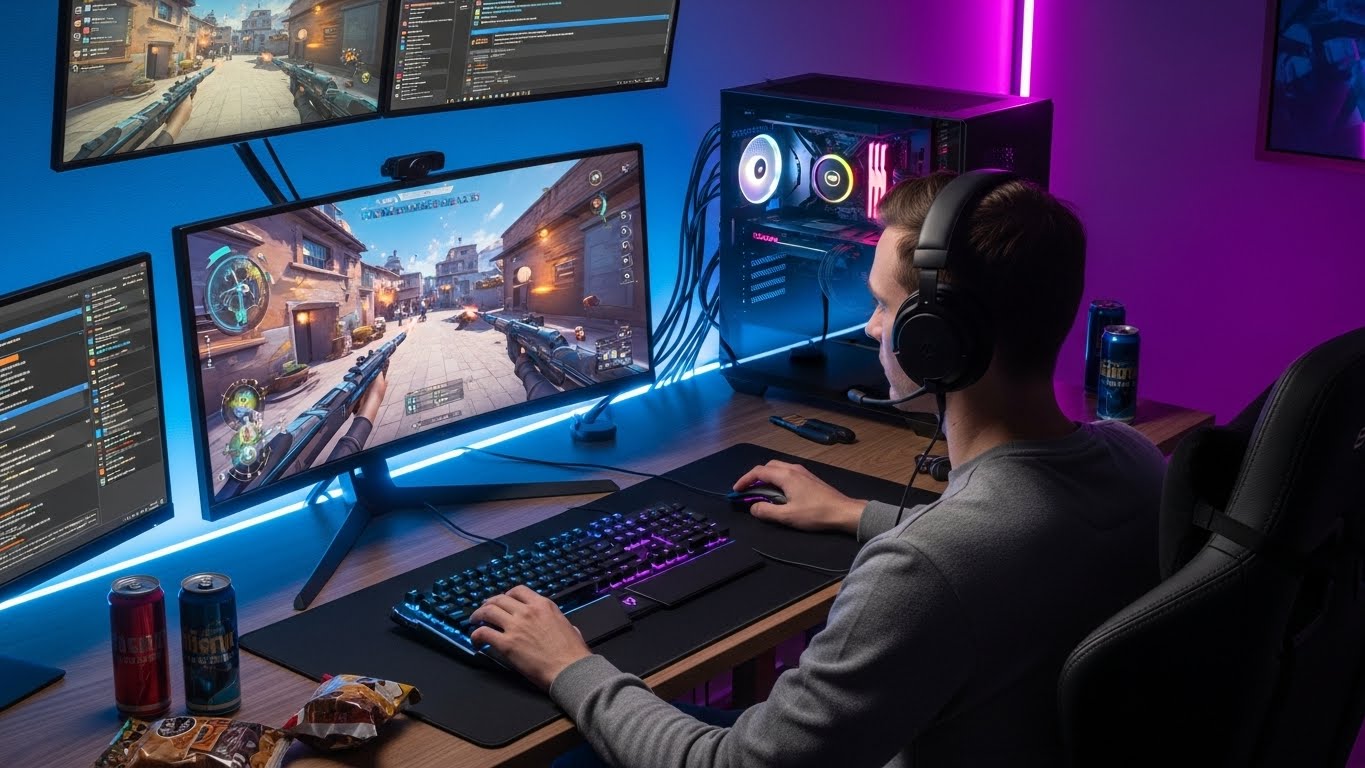
Gaming has transformed from a niche hobby to one of the most influential cultural forces in modern society. What began as simple experiments in computer laboratories has evolved into a multi-billion-dollar industry that shapes entertainment, art, technology, and even education. Today, gaming is not just about playing — it’s about connecting, storytelling, creativity, and innovation.
In this blog, we will journey through the history of gaming, explore how technology revolutionized it, discuss its social and cultural impact, and understand why gaming has become a defining feature of the 21st century.
The Humble Beginnings of Gaming
The story of gaming begins in the 1950s and 1960s, long before consoles or personal computers became household items. Early games like “Tennis for Two” and “Spacewar!” were created by scientists as simple demonstrations of computing power. These primitive games used oscilloscopes and mainframe computers — machines the size of rooms — and were enjoyed by only a handful of researchers.
By the 1970s, gaming began to take its first commercial steps. The release of Pong by Atari in 1972 marked the beginning of the arcade era. Pong’s simple mechanics — two paddles and a bouncing dot — captivated players everywhere. It showed that digital entertainment could be profitable, and it set off a wave of creativity.
Soon after, arcades were filled with games like Space Invaders, Pac-Man, and Donkey Kong, each introducing new gameplay mechanics and iconic characters. These games were not only addictive but also social experiences. Arcades became meeting spots, places where teenagers gathered to compete for high scores and bragging rights.
The Rise of Home Consoles
As the 1980s dawned, gaming entered the home. The introduction of the Atari 2600 brought video games into living rooms across the world. Players could now enjoy multiple games on a single machine using cartridges — a revolutionary concept at the time.
However, the industry faced its first major crash in 1983. Poor quality control, oversaturation, and rushed products led to a collapse of consumer confidence. Many believed video games were a passing fad.
Then came Nintendo, which resurrected the industry with the release of the Nintendo Entertainment System (NES) in 1985. Games like Super Mario Bros., The Legend of Zelda, and Metroid defined what home gaming could be: colorful worlds, imaginative stories, and memorable soundtracks. Nintendo also established quality standards, ensuring players could trust their games again.
The late 80s and early 90s brought fierce competition. Sega entered the market with the Genesis, and their mascot Sonic the Hedgehog rivaled Mario’s fame. The so-called “console wars” between Nintendo and Sega fueled innovation and fan loyalty that still exists today.
The 3D Revolution
The 1990s were the decade of transformation. With advancements in 3D graphics and CD-ROM storage, gaming took a leap from flat, pixelated worlds to fully realized three-dimensional environments.
The Sony PlayStation, released in 1994, changed everything. It introduced cinematic storytelling, sophisticated sound design, and mature themes to gaming. Titles like Final Fantasy VII, Resident Evil, and Metal Gear Solid showcased emotional narratives and complex characters.
At the same time, PC gaming began to flourish. Games like Doom, Quake, and StarCraft pioneered online multiplayer experiences, connecting players across the globe through dial-up connections. This was the foundation for the modern esports scene and online communities we see today.
Meanwhile, Nintendo 64 pushed the boundaries of 3D gameplay with Super Mario 64 and The Legend of Zelda: Ocarina of Time, proving that gaming could be both art and adventure.
The Birth of Online Gaming
As the internet became more accessible in the 2000s, gaming evolved once again. Online multiplayer experiences exploded in popularity. Xbox Live and PlayStation Network allowed players to compete, chat, and share achievements.
Massively Multiplayer Online Role-Playing Games (MMORPGs) like World of Warcraft created persistent virtual worlds where millions of players could interact simultaneously. For many, these worlds became second homes — places to meet friends, join guilds, and live digital lives.
The 2000s also saw the rise of first-person shooters and sports franchises dominating the market. Games like Halo, Call of Duty, and FIFA became household names. The competitive spirit of gaming reached new heights as professional players and tournaments began to emerge.
Mobile Gaming and Accessibility
The introduction of smartphones in the late 2000s and early 2010s marked another revolution. Suddenly, gaming was no longer limited to consoles or PCs. Everyone with a phone could be a gamer.
Simple yet addictive titles like Angry Birds, Candy Crush Saga, and Clash of Clans reached audiences in the hundreds of millions. Mobile gaming democratized play — appealing to casual gamers and serious players alike.
This shift redefined what it meant to be a “gamer.” No longer was gaming confined to enthusiasts or tech-savvy youth; it became a universal pastime across age groups and cultures. Mobile platforms also gave rise to independent developers, who could now publish games without large studios or massive budgets.
The Era of Streaming and Esports
The 2010s ushered in a new cultural phenomenon: game streaming and esports. Platforms like Twitch and YouTube Gaming transformed how people consumed gaming content. Players were no longer just participants — they were entertainers, commentators, and influencers.
Millions watched live broadcasts of games like League of Legends, Fortnite, and Counter-Strike: Global Offensive. Esports evolved into a professional industry with massive arenas, sponsorships, and prize pools rivaling traditional sports.
The rise of streaming also blurred the lines between creators and audiences. Streamers built communities based on personality and passion, while viewers became part of the experience through chat interactions and shared moments. Gaming was no longer a solitary activity; it became a shared global spectacle.
The Role of Storytelling in Modern Gaming
Modern gaming is as much about narrative as it is about mechanics. Games have become a powerful medium for storytelling, exploring complex themes such as morality, identity, and loss.
Titles like The Last of Us, Red Dead Redemption 2, and God of War offer emotional journeys that rival blockbuster films. These games demonstrate how interactivity can deepen empathy — allowing players not just to witness stories but to participate in them.
Independent games have also pushed creative boundaries. Experiences like Journey, Celeste, and Undertale prove that emotional resonance doesn’t require huge budgets, only vision and authenticity.
Storytelling in games is no longer linear. Many titles now offer branching narratives, moral choices, and player-driven consequences, making every playthrough unique. This interactivity has redefined storytelling for the digital age.
Technological Innovation: VR, AR, and AI
Technology continues to reshape gaming at an astonishing pace. Virtual Reality (VR) and Augmented Reality (AR) have expanded what’s possible in interactive entertainment.
VR devices like the Meta Quest and PlayStation VR immerse players in fully realized worlds, offering an unprecedented sense of presence. Meanwhile, AR games like Pokémon GO blend the digital with the real, encouraging exploration and social play.
Artificial Intelligence (AI) has also played a transformative role. AI-driven NPCs (non-playable characters) can now adapt, learn, and respond in lifelike ways. Procedural generation powered by AI enables infinite worlds and emergent gameplay — think of the endless universes of No Man’s Sky or the dynamic behaviors in modern strategy games.
These advancements signal that gaming is not just entertainment but a testing ground for the technologies of the future.
Gaming as a Social Platform
In the modern era, gaming is a social network of its own. Platforms like Fortnite, Roblox, and Minecraft are not just games — they are digital communities where players build, create, and communicate.
Gamers today host concerts, attend virtual events, and celebrate cultural moments inside these digital worlds. Friendships and even relationships form through shared gameplay experiences.
During the global pandemic, gaming became a lifeline for social connection. People gathered in virtual spaces to interact when physical meetings were impossible. This showed how deeply gaming has become woven into the fabric of human connection.
The Cultural Influence of Gaming
Gaming is now one of the most influential forms of media in the world. Its aesthetics, music, and narratives influence film, fashion, and even education. Iconic game characters like Mario, Lara Croft, and Master Chief are recognized across generations.
Music from games is performed in orchestras; cosplay brings digital characters into real life; and gaming conventions attract millions of attendees worldwide.
The cultural power of gaming extends beyond entertainment — it shapes conversations about creativity, diversity, and identity. Representation in gaming has improved over time, giving voice to underrepresented communities and showcasing global perspectives.
The Business of Gaming
The gaming industry today surpasses the combined revenues of film and music. From indie developers to major publishers, it’s a complex ecosystem powered by creativity, technology, and market demand.
Microtransactions, downloadable content (DLC), and subscription models have redefined how games are monetized. While these systems have sparked debates about fairness and ethics, they also reflect the evolving nature of the industry’s economy.
Game development itself has become more accessible. Tools like Unreal Engine and Unity empower small teams or even individuals to create high-quality games. Crowdfunding and early access platforms have enabled players to directly support development projects they believe in.
This financial and creative empowerment ensures that the future of gaming will be more diverse than ever.
The Educational and Psychological Dimensions of Gaming
Contrary to old stereotypes, gaming is not a mindless distraction. Studies show that games can improve cognitive skills, problem-solving abilities, and teamwork.
Educational games are used in classrooms to teach subjects ranging from math to history. Simulations help train professionals — from pilots using flight simulators to doctors practicing surgical procedures.
Moreover, gaming has proven therapeutic benefits. It offers stress relief, social connection, and even helps in treating conditions such as anxiety or PTSD through controlled virtual experiences.
Games also encourage creativity and critical thinking. Sandbox games like Minecraft and Terraria empower players to build, experiment, and innovate in ways traditional media never could.
Challenges in the Gaming World
Despite its many achievements, the gaming industry faces significant challenges.
Toxicity and harassment in online communities remain major concerns. Developers and platforms are working to create safer and more inclusive spaces, but progress is ongoing.
Crunch culture — the practice of overworking developers — highlights the pressures behind the creation of large-scale games. Discussions around labor rights and mental health in game development are becoming increasingly important.
Additionally, the rise of loot boxes, pay-to-win mechanics, and addictive design elements has sparked conversations about regulation and ethical responsibility.
While these challenges exist, they are signs of a maturing industry learning to balance creativity, profit, and player well-being.
The Future of Gaming
Looking ahead, the future of gaming is boundless. Cloud gaming services allow players to stream high-end titles without expensive hardware. Cross-platform play has united previously divided player bases.
Advances in AI promise more dynamic worlds and personalized experiences. Imagine games that evolve with you — learning your preferences, adjusting difficulty, and creating stories tailored to your decisions.
The metaverse, though still in its early stages, envisions interconnected virtual worlds where gaming, social life, and commerce converge. Whether or not it becomes mainstream, it reflects how deeply gaming influences our digital evolution.
As technology continues to advance, one truth remains constant: gaming will always be about human imagination — the desire to explore, create, and connect.
Conclusion: Gaming as the Art of Interaction
Gaming has come a long way from simple pixels bouncing across screens. It has grown into a global culture that transcends borders, languages, and generations. It’s not just about fun — it’s about expression, innovation, and connection.
Every era of gaming reflects the spirit of its time. From the arcade buzz of the 80s to the immersive worlds of today, gaming continues to evolve, inviting us to dream, compete, and collaborate.
As players, creators, and dreamers, we are all part of this incredible journey. The future of gaming isn’t just something to watch — it’s something to play, shape, and live.
Because in the end, gaming is more than entertainment. It’s the art of interaction — and the story of us all.