Introduction: A New Era of Gaming
Gaming has come a long way since the early days of 8-bit graphics and pixelated heroes. What started as simple entertainment for the masses has evolved into a multi-billion-dollar industry that captivates millions around the globe. Today, gaming is no longer just about playing; it’s about experiencing, immersing, and connecting in ways that were once unimaginable. This post will explore the fascinating evolution of gaming, highlighting its transformative journey from its humble beginnings to the groundbreaking innovations of modern-day experiences.
The Dawn of Video Games: From Pong to Pac-Man
The 1970s marked the birth of video games, and the very first gaming experiences were relatively simplistic compared to what we have now. Pong, released in 1972 by Atari, was one of the earliest commercially successful video games. Its gameplay—two paddles bouncing a ball back and forth—was simple, but the novelty of interactive entertainment captured the imagination of many.
In the late 70s and early 80s, arcade games like Space Invaders and Pac-Man became cultural phenomena. These games were colorful, fun, and offered the thrill of competition. However, the limited technology at the time kept the gameplay basic. Yet, for many players, these simple games formed the foundation of a growing passion for digital entertainment.
The Rise of Consoles: Bringing Games to Homes
By the 1980s, the idea of bringing video games into people’s homes began to take shape. The Atari 2600, released in 1977, was one of the first home consoles to offer a broad range of games, allowing players to experience the magic of arcade gaming from the comfort of their living rooms. Nintendo’s introduction of the NES (Nintendo Entertainment System) in 1985 further revolutionized home gaming by offering a wide selection of titles, including iconic franchises like Super Mario Bros. and The Legend of Zelda. This era laid the groundwork for home consoles to become a central part of entertainment for families worldwide.
The 16-bit consoles of the 90s, like the Super Nintendo Entertainment System (SNES) and Sega Genesis, provided a more immersive experience with better graphics, sound, and more complex gameplay. This shift marked the transition from simple games to more involved and narrative-driven experiences.
The 3D Revolution: A Leap into New Dimensions
The mid-90s saw the gaming industry undergo a monumental shift with the advent of 3D graphics. Sony’s PlayStation and the Nintendo 64 brought gaming into a new dimension, both literally and figuratively. Titles like Super Mario 64 and Final Fantasy VII opened up entirely new possibilities for gameplay, blending expansive worlds with intricate storytelling.
3D technology gave developers the ability to create more lifelike environments, and players could now explore vast open worlds. The experience was no longer confined to a screen of 2D sprites; it became an immersive journey where players could interact with their surroundings in real time.
This period also introduced the first truly multiplayer online experiences, as the internet began to expand. Games like Quake and Diablo pioneered the world of online multiplayer, offering players the ability to connect and compete with others globally.
The Age of HD and Open Worlds: Gaming Gets Bigger
The 2000s ushered in an era where consoles like the PlayStation 3, Xbox 360, and Nintendo Wii began pushing the boundaries of both graphics and gameplay. High-definition graphics were now a norm, allowing for detailed and breathtaking visuals in games like Halo 3, Grand Theft Auto IV, and The Elder Scrolls V: Skyrim.
Open-world games took the spotlight, giving players entire worlds to explore. In these games, the line between linear and open-ended narratives began to blur, allowing players to experience freedom like never before. These expansive games enabled players to craft their own stories, undertake side quests, and immerse themselves in rich environments for hours on end.
Furthermore, the gaming industry saw the introduction of motion controls with the Wii and Kinect, and the rise of online gaming with services like Xbox Live and PlayStation Network, allowing gamers to connect with others around the world.
Virtual Reality: Entering the Metaverse
In recent years, the gaming landscape has been redefined by emerging technologies such as virtual reality (VR). The promise of stepping into a fully immersive digital world has become a reality thanks to VR headsets like the Oculus Rift and HTC Vive. Players can now interact with their environment in an entirely new way, bringing a sense of physical presence to the gaming experience.
While VR gaming is still in its infancy, it has already provided glimpses of the future, where you can swing swords, solve puzzles, or fly through the sky—all while feeling like you’re physically there. With advancements in haptic feedback, motion tracking, and better graphical fidelity, VR has the potential to reshape gaming in ways we haven’t even imagined yet.
Cloud Gaming: The Future is Streaming
As internet speeds increase and data storage becomes more advanced, cloud gaming is poised to change the way we play games. Platforms like Google Stadia and NVIDIA GeForce Now are bringing console-quality gaming to devices that were previously not capable of running high-end games.
Cloud gaming eliminates the need for expensive hardware, making games more accessible to a wider audience. This technology also promises to make gaming more portable, as players will be able to access their favorite titles from virtually any device with an internet connection.
While cloud gaming still faces challenges such as latency and game library limitations, its potential is undeniable. As the technology continues to improve, we may be on the verge of a world where gamers no longer need to own consoles or high-powered PCs to enjoy cutting-edge games.
Esports: The Rise of Competitive Gaming
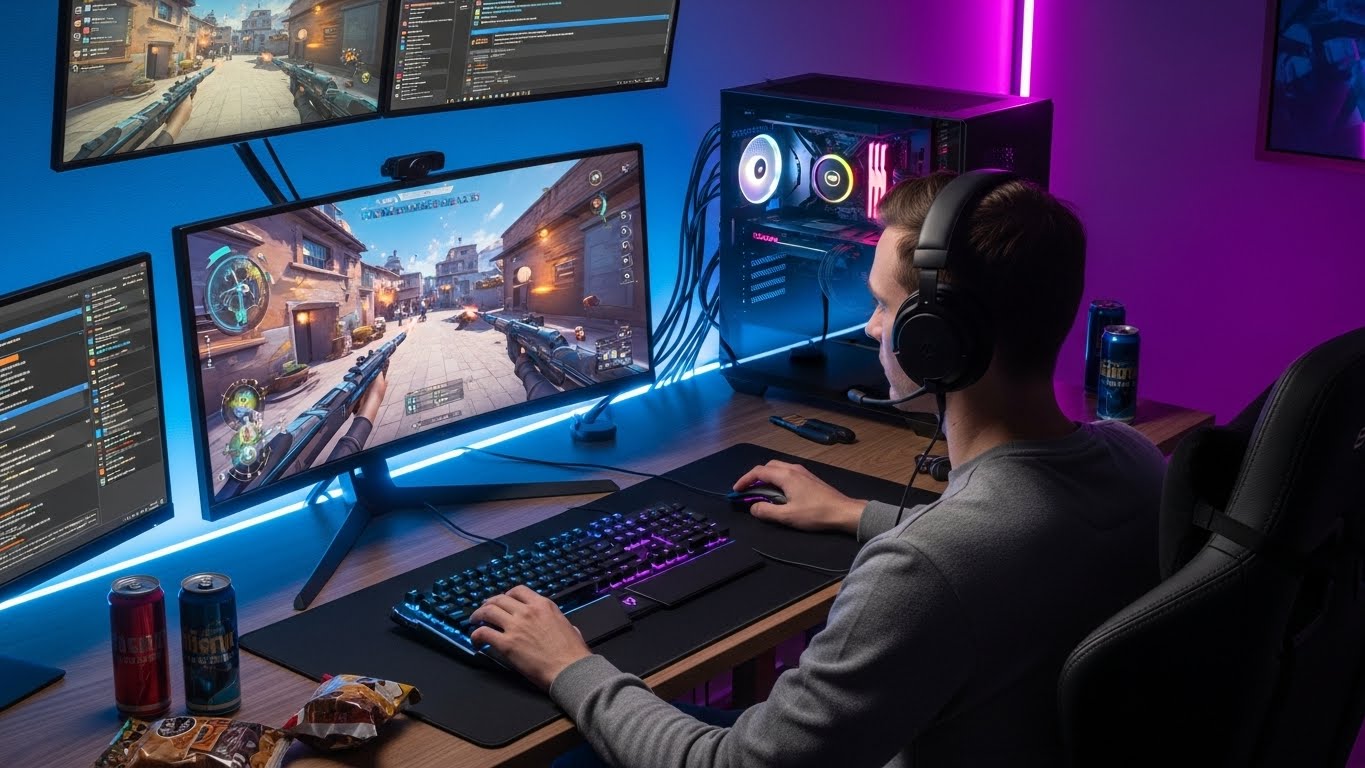
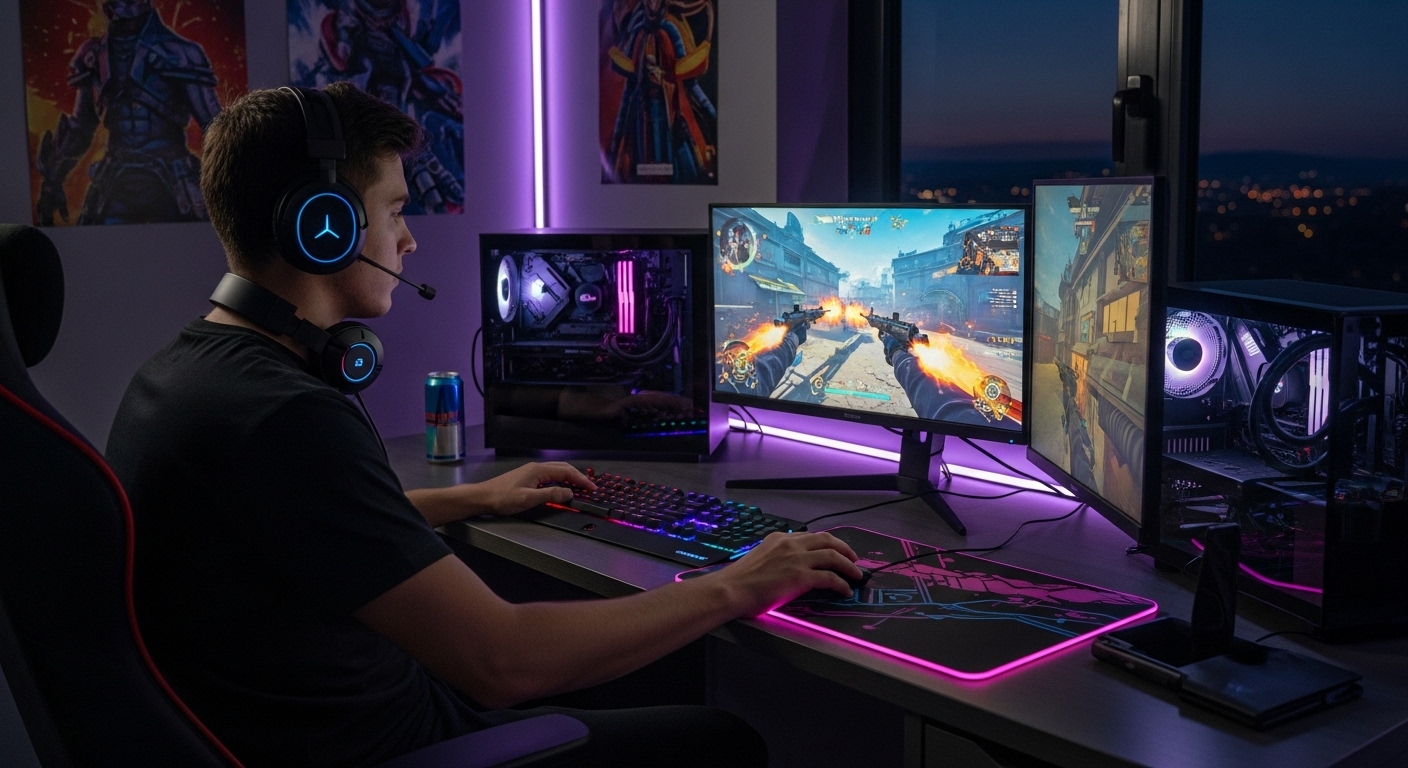
Another facet of modern gaming that has exploded in recent years is esports. What was once a niche activity has evolved into a global phenomenon, with professional gamers competing in tournaments watched by millions of fans. Games like League of Legends, Dota 2, and Fortnite have become the focus of professional leagues, offering huge cash prizes and sponsorships.
Esports has not only become a competitive arena but also a source of entertainment and a career for many. Streamers and professional players have garnered massive followings, and platforms like Twitch and YouTube have become the new stage for these rising stars. Esports has even gained recognition in major sports events like the Asian Games, further solidifying its place in the mainstream.
Conclusion: A Glimpse into the Future
Gaming has come a long way, from simple pixelated graphics to fully immersive experiences in virtual worlds. The industry continues to grow and evolve, with new technologies and innovations emerging every year. With the rise of virtual reality, cloud gaming, and esports, it’s clear that the future of gaming holds even more exciting possibilities.
As players, we are no longer passive participants; we are creators, competitors, and explorers in virtual realms that blur the lines between reality and fiction. The next frontier of gaming promises to be as thrilling as the journey we’ve taken so far, and it’s a ride that shows no signs of slowing down. Whether you’re a casual gamer or a seasoned pro, one thing is certain: the world of gaming will continue to surprise, challenge, and captivate us for years to come.