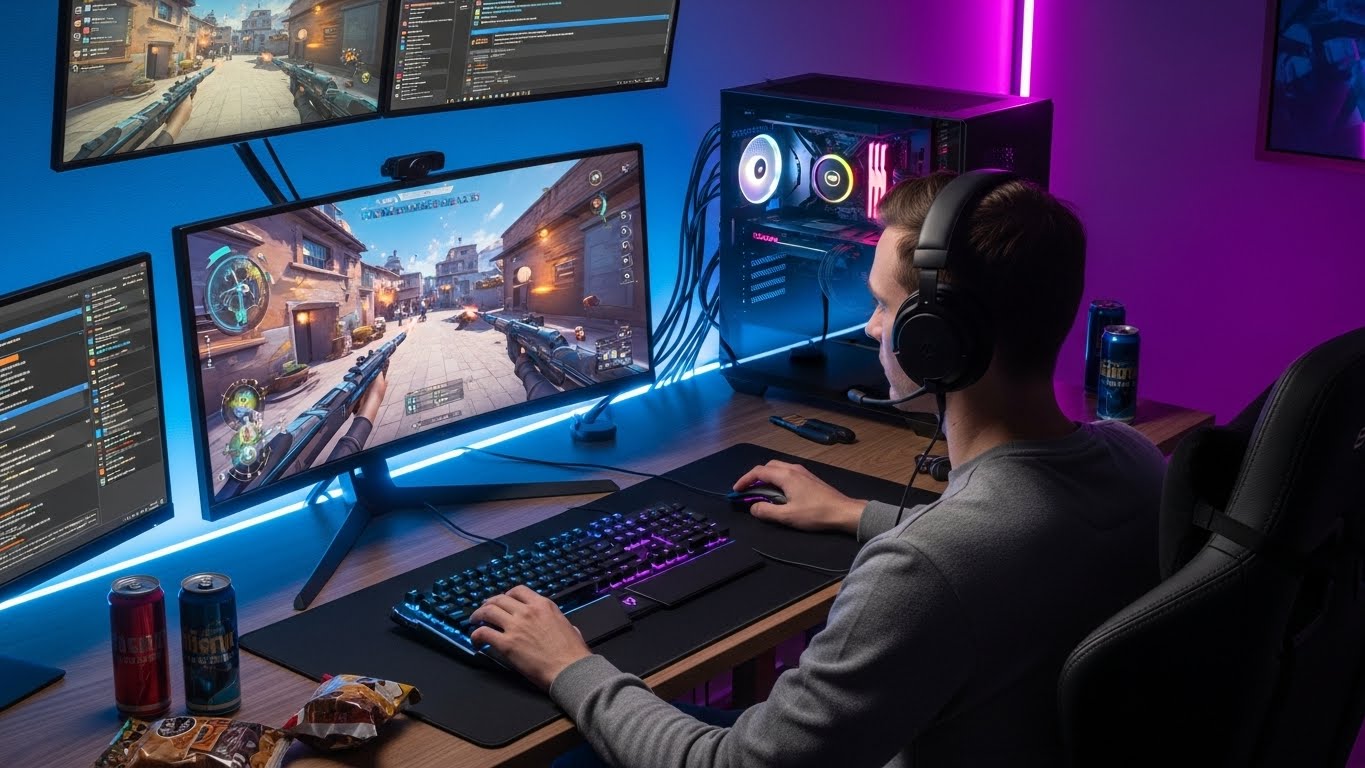

Introduction: The Unstoppable Rise of Gaming Culture
The world of gaming has undergone a dramatic transformation over the past few decades. Once considered a niche hobby for a select group of enthusiasts, gaming has evolved into one of the largest entertainment industries in the world, attracting millions of players and viewers from all walks of life. With the advancement of technology, gaming is no longer just about simple pixelated screens and basic gameplay. Today, it’s about immersive experiences, intricate storylines, realistic graphics, and a global culture that brings together people of all ages, backgrounds, and interests.
As technology continues to push the boundaries of what’s possible, gaming has expanded beyond the confines of traditional consoles and PCs. From the mobile gaming revolution to the advent of virtual reality (VR) and augmented reality (AR), the gaming world is evolving at an incredible pace. But what exactly has brought about this cultural shift, and where is gaming headed in the future?
This blog will take you on a journey through the history of gaming, its current landscape, and the exciting possibilities that lie ahead. From the early days of arcade games to the rise of online multiplayer, gaming is now a global phenomenon with far-reaching implications. So, let’s dive into the world of gaming and explore how this form of entertainment continues to evolve.
The Birth of Video Games: A Humble Beginning
The origins of video games date back to the 1950s and 1960s when early computer scientists and engineers began experimenting with interactive entertainment on primitive machines. One of the first games to capture public attention was Spacewar! (1962), created by Steve Russell at MIT. The game was relatively simple by today’s standards, but it marked the beginning of an industry that would grow exponentially over the next few decades.
However, it wasn’t until the 1970s that video games started to gain widespread popularity. The launch of Pong in 1972 by Atari is often cited as the first commercially successful video game. Pong, a simple two-dimensional table tennis simulation, became an instant hit in arcades, and its success sparked the creation of more arcade games. The 1970s and early 1980s were a golden age for arcades, with iconic games like Space Invaders, Pac-Man, and Donkey Kong capturing the imagination of players everywhere.
While arcade gaming was dominant during this time, home gaming consoles were also beginning to emerge. The Atari 2600, released in 1977, marked the beginning of home gaming as we know it. The 1980s saw a boom in console gaming, as more people started to purchase home systems to play games in the comfort of their living rooms. This marked the shift from arcade machines to consoles, making gaming more accessible to a broader audience.
The 1990s: The Age of 3D and Online Gaming
The 1990s were a pivotal decade for the gaming industry. The transition from 2D to 3D graphics fundamentally changed the way games were developed and played. Consoles like the Sony PlayStation, the Nintendo 64, and the Sega Saturn ushered in an era of more complex, visually stunning games. Titles like Super Mario 64, Final Fantasy VII, and The Legend of Zelda: Ocarina of Time became landmarks in gaming history, pushing the boundaries of storytelling and gameplay.
At the same time, the internet began to play a more significant role in gaming. Online gaming was still in its infancy, but the introduction of dial-up internet allowed players to connect with one another and experience games in new ways. Doom (1993) and Warcraft (1994) were early pioneers of online multiplayer games, offering players the opportunity to battle against each other in virtual arenas. These early online games laid the foundation for the massive multiplayer games we see today.
As the decade progressed, the idea of multiplayer gaming began to evolve. The release of Diablo in 1996 and StarCraft in 1998 by Blizzard Entertainment set the stage for what would become a thriving online gaming community. In addition to local multiplayer, gamers could now connect over the internet to compete against players worldwide. The concept of online gaming tournaments also began to take shape, paving the way for the esports scene that would explode in the 2000s.
The 2000s: High-Definition Graphics and the Explosion of Esports
The 2000s were marked by significant technological advancements that transformed the gaming industry. Consoles like the Sony PlayStation 2, Xbox, and Nintendo GameCube dominated the market, and with them came a wave of critically acclaimed games. Titles like Halo 2, Grand Theft Auto: San Andreas, and The Elder Scrolls III: Morrowind offered expansive worlds, deep narratives, and a level of interactivity that had never been seen before.
The development of high-definition graphics and more powerful hardware allowed game developers to create even more immersive experiences. The PlayStation 3 and Xbox 360, released in the mid-2000s, were capable of rendering stunning visuals that brought games to life in ways previously thought impossible. The Elder Scrolls V: Skyrim, Gears of War, and BioShock are just a few examples of games that showcased the next generation of gaming technology.
During this time, the concept of esports really began to take off. Competitive gaming, which had been growing since the 1990s, became a global phenomenon in the 2000s. Major titles like Counter-Strike, StarCraft, and League of Legends attracted large audiences, and esports tournaments began to offer significant cash prizes, professional players, and sponsorships. The growth of platforms like Twitch allowed gamers to stream their gameplay to a worldwide audience, making esports more accessible and popular than ever before.
Esports organizations like ESL (Electronic Sports League) and MLG (Major League Gaming) became well-established, and in 2009, League of Legends was released, becoming one of the most popular competitive games in the world. Esports was no longer a niche hobby; it was a legitimate industry with millions of fans and viewers tuning in to watch professional gamers compete at the highest level.
The 2010s: Mobile Gaming, Virtual Reality, and Streaming
The 2010s marked another pivotal moment for the gaming industry, as new technologies and platforms began to reshape the way we played games. One of the biggest shifts of the decade was the rise of mobile gaming. The launch of the Apple App Store in 2008, followed by the Google Play Store, made it easier than ever for people to access a wide variety of games on their smartphones and tablets. Games like Angry Birds, Candy Crush Saga, and Pokémon GO became global phenomena, attracting millions of players who never considered themselves traditional gamers.
In addition to mobile gaming, the 2010s saw the growth of virtual reality (VR) gaming. The release of VR headsets like the Oculus Rift and HTC Vive in the mid-2010s offered players an entirely new way to experience games. Virtual reality transported players into fully immersive 3D worlds, where they could interact with the environment in ways that traditional gaming could not replicate. Beat Saber, Half-Life: Alyx, and The Walking Dead: Saints & Sinners are just a few examples of VR games that demonstrated the potential of this new technology.
Meanwhile, the rise of game streaming platforms like Twitch and YouTube Gaming created a new form of entertainment. Gamers were no longer just players; they were also content creators. Streaming allowed players to broadcast their gameplay live to audiences around the world, enabling them to build fanbases and make careers out of playing games. Esports tournaments were streamed live, and streaming services became a primary way for fans to engage with gaming content.
The development of cloud gaming also began to take shape in the 2010s. Services like Google Stadia, Xbox Cloud Gaming (formerly known as Project xCloud), and NVIDIA GeForce Now allowed gamers to play AAA games on almost any device with an internet connection, eliminating the need for high-end gaming hardware. While cloud gaming is still in its early stages, it holds the potential to make gaming more accessible and eliminate hardware barriers for players.
The 2020s and Beyond: The Future of Gaming
As we move further into the 2020s, the gaming industry is poised for even more dramatic changes. Several trends are already beginning to take shape that will define the future of gaming.
The Rise of AI and Procedural Generation
Artificial intelligence (AI) is set to play a major role in the future of gaming. AI-driven NPCs (non-playable characters) will become more intelligent and reactive, allowing for more dynamic and immersive game worlds. Procedurally generated content, which uses algorithms to create infinite worlds and scenarios, will become more common, offering players unique and varied experiences each time they play.
Open-world games that feel truly alive, like The Witcher 3 or Red Dead Redemption 2, will evolve further, with more advanced AI creating ever-changing environments. Dynamic storytelling, where player choices lead to vastly different outcomes, will become the norm in narrative-driven games.
The Metaverse: The Next Evolution of Social Gaming
The concept of the metaverse, a fully immersive digital universe where players can interact with each other and the environment in real time, is gaining traction. Companies like Facebook (now Meta) are investing heavily in virtual reality and augmented reality to build the next iteration of the internet. In the metaverse, players could live out entire digital lives, attending virtual concerts, working, socializing, and, of course, gaming.
As VR and AR technology advances, the metaverse could provide a platform for not just gaming but also education, work, and entertainment. The lines between the physical and digital worlds will continue to blur, making gaming a central component of our everyday lives.
The Continued Evolution of Esports
Esports will only continue to grow in the coming years. With more professional leagues, sponsorships, and broadcasting platforms, esports will attract more attention from mainstream audiences. The potential for esports to become an Olympic event is even being discussed, which could further legitimize competitive gaming as a sport on the world stage.
New games and innovations in gaming technology will keep the esports ecosystem fresh, ensuring that it remains an exciting and dynamic form of entertainment for years to come.
Conclusion: Gaming’s Future is Limitless
The world of gaming has come a long way since the days of pixelated screens and simple arcade machines. Today, gaming is a multi-billion-dollar industry that encompasses everything from mobile games to high-definition VR experiences. The future of gaming is filled with exciting possibilities—artificial intelligence, the metaverse, cloud gaming, and much more.
As technology continues to advance, the gaming experience will only become more immersive, interactive, and accessible. One thing is for sure: gaming is here to stay, and its evolution is just beginning. Whether you’re a casual player or a hardcore enthusiast, there’s never been a better time to be part of the gaming community. The world of gaming is limitless, and the journey ahead promises to be nothing short of extraordinary.