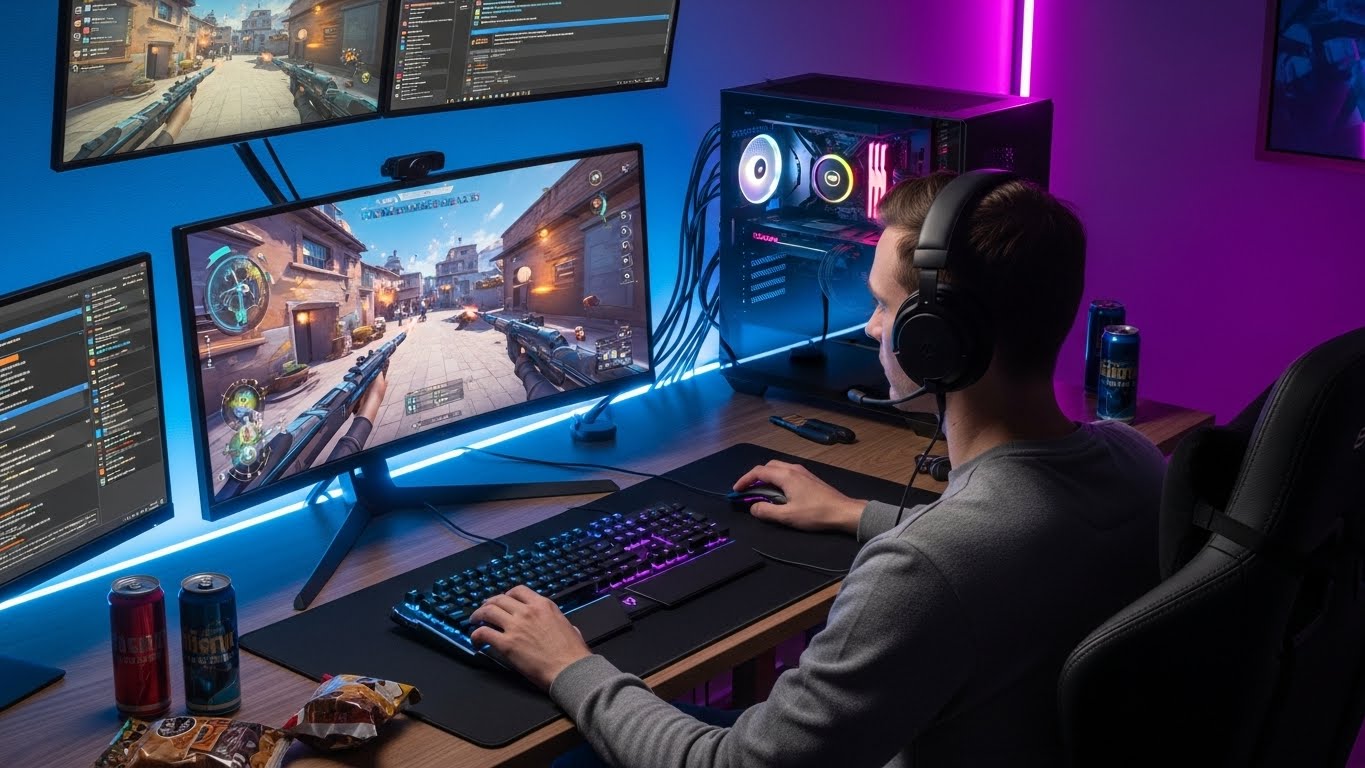

Introduction: Gaming as a Cultural Force
Gaming has come a long way since its humble beginnings in arcades and living rooms. What was once a niche hobby reserved for a small group of enthusiasts has now blossomed into one of the largest entertainment industries in the world. Today, gaming is more than just a pastime; it’s a global cultural phenomenon that shapes the way we socialize, compete, and even learn. With the rise of esports, mobile gaming, virtual reality, and cloud gaming, the industry is evolving faster than ever before. But at its core, gaming has remained a source of entertainment, creativity, and community. In this blog post, we will explore the journey of gaming, from its origins to its current state and its future potential.
The Genesis of Gaming: A Simple Escape
The story of gaming begins in the 1950s and 1960s, at the dawn of computer technology. Early video games were born out of the desire to use computing machines for entertainment. The first known video game, Tennis for Two, was developed by physicist William Higinbotham in 1958 as a way to demonstrate the capabilities of an oscilloscope. The game was a simple two-player tennis simulation that displayed on a screen—a rudimentary precursor to what would later become the gaming industry.
Shortly thereafter, Spacewar! was created in 1962 by Steve Russell and others at MIT. Spacewar! is widely considered one of the first truly influential video games, featuring two spaceships engaged in a dogfight in outer space. The game was shared between universities and military installations, sparking the curiosity of early programmers and game designers. By the early 1970s, arcade machines such as Pong made their way into public spaces, allowing people to interact with digital entertainment for the first time.
These early games were not yet considered mainstream entertainment, but they laid the groundwork for an industry that would soon explode in popularity. Gaming, as we know it today, was still in its infancy, but its potential was beginning to emerge.
The Rise of Home Consoles: Bringing Games into the Living Room
By the late 1970s and early 1980s, the concept of home gaming consoles began to take shape. The Atari 2600, released in 1977, was one of the first consoles to bring video games into people’s homes. It featured a library of games on cartridges, allowing players to change games without needing a new machine. The Atari 2600 was a game-changer in the industry, popularizing gaming as a home entertainment medium.
The early 1980s also saw the release of Pac-Man, a game that became a cultural icon. With its colorful, simple design and addictive gameplay, Pac-Man brought arcade gaming into the mainstream. As the success of arcade games like Pac-Man and Space Invaders continued to grow, more home consoles like the Nintendo Entertainment System (NES) began to establish themselves in living rooms worldwide.
The NES, which launched in 1985, was another pivotal moment in the history of gaming. It introduced classic franchises like Super Mario Bros., The Legend of Zelda, and Metroid, helping to solidify gaming as a mainstream form of entertainment. With the NES, games were no longer just a passing fad or an isolated activity—they were a part of daily life for millions of people.
The Golden Age of Gaming: Innovation and Expansion
The 1990s marked a period of rapid technological innovation and expansion in the gaming world. The introduction of 3D graphics was one of the most significant breakthroughs in gaming history. This new technology allowed developers to create more immersive worlds, with games like Super Mario 64 and The Legend of Zelda: Ocarina of Time showcasing vast 3D environments for players to explore. These games became milestones not only in gaming history but also in the larger entertainment landscape, demonstrating the power of video games as an immersive medium.
This era also marked the rise of new gaming consoles. Sony’s PlayStation, released in 1994, became an immediate success, and its 3D capabilities and strong library of games, including Final Fantasy VII and Gran Turismo, pushed gaming into a new era. Sega’s Dreamcast, while not as commercially successful as the PlayStation, introduced innovative features like online gaming and improved graphics. The competition between Sony, Sega, and Nintendo fueled rapid innovation, and the gaming world saw a golden age of creativity, with a variety of genres and game types emerging.
As technology progressed, game developers began to focus more on storytelling and character development. The 1990s saw the birth of many beloved franchises, including Final Fantasy, Metal Gear Solid, and Tomb Raider. These games not only offered innovative gameplay but also introduced complex narratives that rivaled those of films and literature. Players were no longer simply solving puzzles or completing tasks; they were becoming immersed in rich, narrative-driven experiences.
The Digital Revolution: Online Gaming and the Birth of Esports
The early 2000s ushered in a new era of connectivity and competition, as the internet began to play a central role in the gaming experience. The rise of broadband internet allowed for online multiplayer games to flourish, creating a new dimension to gaming that had never existed before. Games like Halo 2, Counter-Strike, and World of Warcraft brought players together from around the globe to engage in team-based competition and cooperative play.
Online gaming changed the social fabric of gaming itself. Players could now interact with others in real-time, forming friendships, rivalries, and alliances that transcended geographical boundaries. The experience of playing with or against people from different cultures and backgrounds added a new level of excitement and unpredictability to gaming.
In parallel, the rise of esports marked the beginning of professional competitive gaming. Esports tournaments, such as the League of Legends World Championship and The International for Dota 2, became massive global events, attracting millions of viewers and offering multi-million-dollar prize pools. Professional gamers, once considered outliers, now had careers with sponsorships, salaries, and fame akin to traditional sports stars.
The digital revolution wasn’t just limited to multiplayer games. Digital distribution platforms like Steam revolutionized the way players accessed and purchased games. No longer did players need to buy physical copies from stores; instead, they could download games directly onto their computers or consoles. This shift made it easier for indie developers to enter the market, democratizing game development and leading to the rise of indie games such as Minecraft, Stardew Valley, and Undertale.
The Mobile Gaming Explosion: Games Everywhere, Anytime
The introduction of smartphones changed everything. With mobile devices becoming an integral part of everyday life, mobile gaming quickly became one of the largest segments of the gaming industry. Games like Angry Birds, Candy Crush, and Clash of Clans became global sensations, offering simple, addictive gameplay that could be played anywhere at any time.
Mobile gaming has broken down the barriers between casual and hardcore gamers. The accessibility of mobile games has made gaming an activity that almost everyone can participate in, regardless of age, experience, or location. For some, mobile gaming is a way to pass the time during a commute, while for others, it has become a primary form of entertainment.
The rise of mobile gaming also saw the growth of the “freemium” business model, where games are free to download but offer in-app purchases to enhance the gaming experience. This model has proven to be highly profitable, and many mobile games now earn revenue through microtransactions, allowing developers to keep the game free while generating income.
Virtual Reality: Gaming in a New Dimension
As technology continues to advance, virtual reality (VR) has emerged as the next frontier for gaming. VR offers an immersive experience where players are not just interacting with a screen but are fully enveloped in a virtual environment. With VR headsets like the Oculus Rift and HTC Vive, players can physically move, look around, and interact with the virtual world in a way that feels incredibly real.
Games like Beat Saber, Half-Life: Alyx, and Resident Evil 7 have shown the potential of VR to provide a truly immersive gaming experience. However, while VR technology has come a long way, it is still in its early stages, and many players are waiting for the technology to become more refined and accessible. The future of VR gaming looks incredibly promising, with the potential to transform everything from how we play to how we socialize, shop, and work in virtual spaces.
The Future of Gaming: Cloud Gaming and the Metaverse
Looking ahead, the future of gaming seems brighter than ever. Cloud gaming, where games are streamed from remote servers rather than being run locally on a console or PC, is set to be a game-changer. Services like Google Stadia, Microsoft’s Xbox Cloud Gaming, and Nvidia’s GeForce Now are already allowing players to play high-end games on a variety of devices, from smartphones to low-powered laptops. This technology could eliminate the need for expensive gaming hardware, making gaming more accessible to people around the world.
The rise of the “metaverse” is another trend that could reshape gaming. The metaverse refers to interconnected virtual worlds where people can socialize, play, work, and even create content. Companies like Facebook (now Meta) are investing heavily in the metaverse, and it’s possible that gaming will be one of its central pillars. In the future, players may find themselves not just playing games but living within them—engaging with friends, exploring new worlds, and creating their own digital spaces.