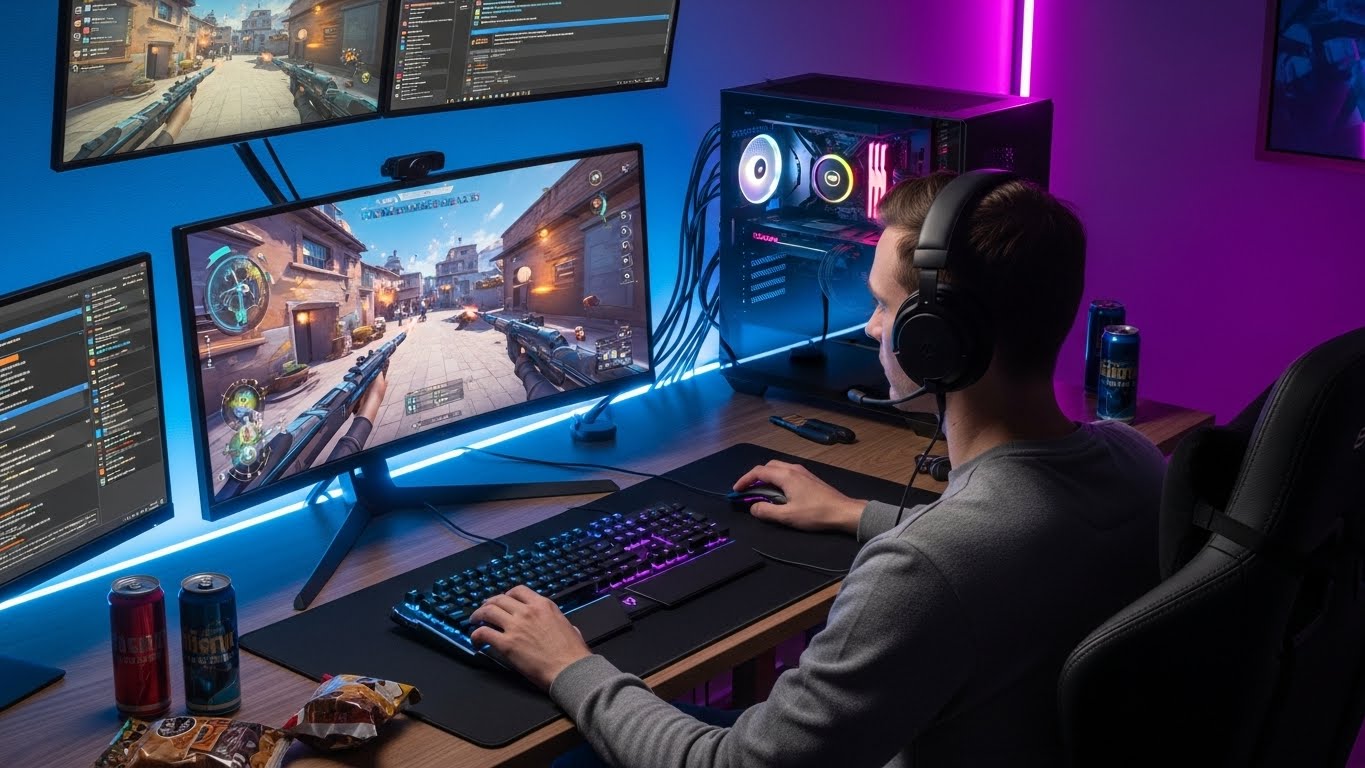
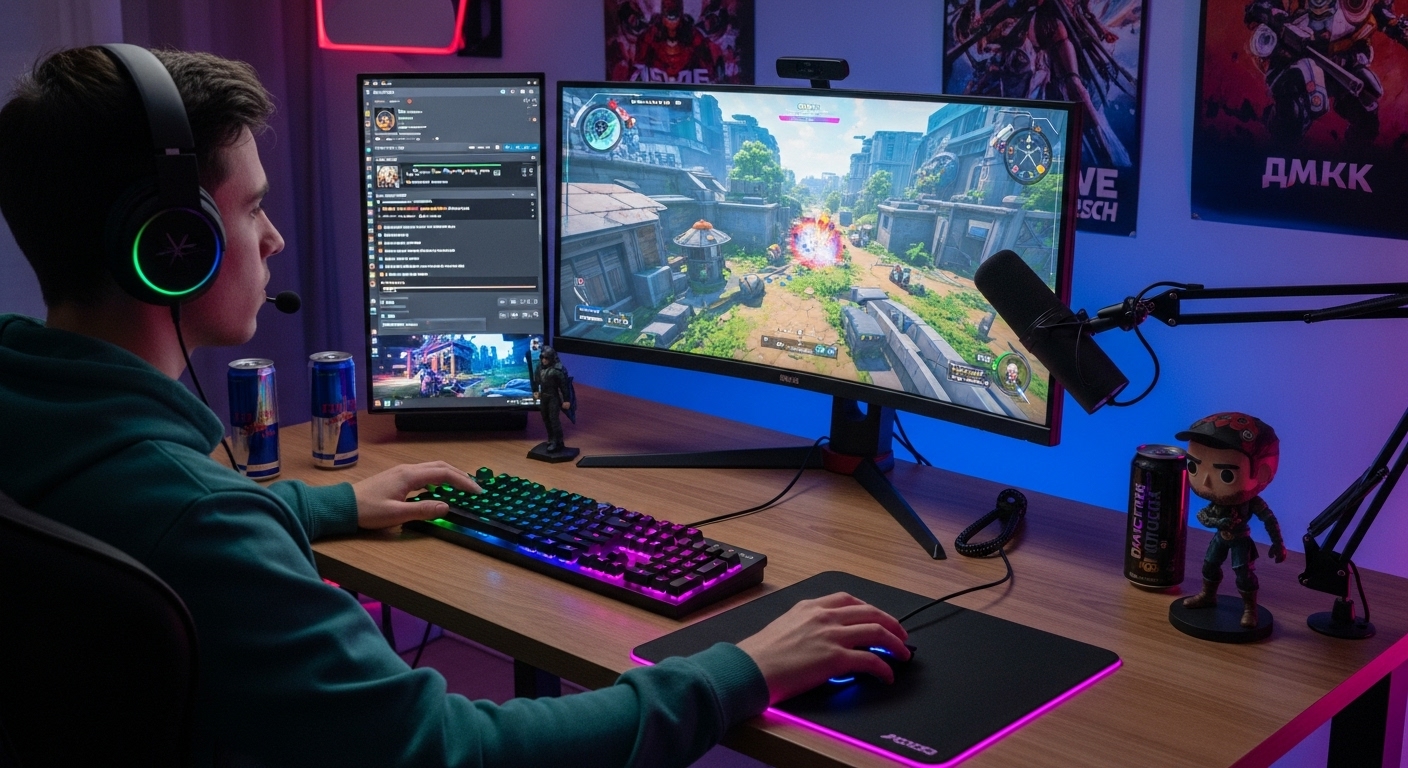
Introduction: Gaming as a Cultural and Social Phenomenon
Gaming has evolved beyond simple entertainment; it has become a dynamic cultural and social force that impacts how we connect with others, challenge our intellect, and experience interactive stories. What began as a form of amusement in arcades has morphed into a multi-billion-dollar industry that spans various platforms, from mobile phones to PC gaming, and even virtual reality (VR). The gaming world today is more diverse than ever, offering something for everyone, regardless of age, skill, or interest.
Over the past few decades, gaming has transitioned from a niche hobby into a global cultural phenomenon, influencing everything from technology and education to art and media. This blog will explore the history, evolution, and impact of gaming, looking at how it has grown into a form of entertainment that connects millions of people worldwide and continues to redefine the way we experience digital play.
The Origins of Gaming: From Simple Beginnings to Complex Games
Games have existed for centuries, with origins tracing back to ancient civilizations where games of strategy, chance, and skill were used to both entertain and educate. One of the earliest recorded games is Senet, a board game played in ancient Egypt as early as 3100 BC. It wasn’t just a pastime; it also had religious significance, with the game’s board representing the journey of the soul through the afterlife. Similarly, games like Go from China and Backgammon from the Middle East were developed in antiquity, evolving over time to become the board games we recognize today.
As societies developed, so did games, with strategic thinking, social interaction, and competitive play becoming more embedded in cultural traditions. For centuries, games remained largely physical or board-based. It wasn’t until the 20th century, when technological innovations made digital play possible, that the gaming world as we know it truly began to emerge.
The Rise of Video Games: The Birth of Digital Entertainment
The 1970s marked the beginning of the video game era, with the creation of simple arcade games like Pong and Space Invaders. These early video games were rudimentary in design but introduced the concept of interactive digital entertainment. Pong, one of the first commercially successful video games, mimicked the game of table tennis and brought video gaming into the public consciousness. These arcade games drew in crowds with their novelty, and soon, arcades began to spring up in cities around the world.
By the 1980s, video gaming had expanded into homes with the introduction of consoles like the Atari 2600 and the Nintendo Entertainment System (NES). Home consoles revolutionized how people played games, allowing them to experience entertainment in the comfort of their own living rooms. Iconic titles like Super Mario Bros. and The Legend of Zelda became household names, offering exciting gameplay, storytelling, and vibrant worlds that players could explore at their own pace.
The Evolution of Game Genres: A Shift Towards Diversity
As technology advanced, so did the variety of games available. The 1990s and 2000s saw the diversification of gaming genres, as developers began to experiment with new ideas, creating expansive worlds, intricate narratives, and varied gameplay mechanics. The role-playing game (RPG) genre, for instance, became more prominent with the release of Final Fantasy VII and The Elder Scrolls series. These games offered deep stories, character development, and immersive environments, inviting players to lose themselves in virtual worlds.
First-person shooters (FPS) like Doom and Halo captured the attention of competitive players with fast-paced action and intense multiplayer combat. Strategy games like StarCraft and Command & Conquer became popular for their emphasis on resource management, tactical thinking, and multiplayer strategy. Sports games, racing games, and simulation games also grew in popularity, providing players with the chance to experience everything from running a virtual farm in Harvest Moon to competing in realistic racing simulations in Gran Turismo.
With this explosion of genres came an increase in the number of gaming platforms available. PCs became a primary platform for high-performance gaming, offering customization and powerful hardware for graphically intensive games. Meanwhile, consoles like PlayStation, Xbox, and Nintendo continued to innovate with new iterations and exclusive titles, ensuring that there was a game for everyone.
The Rise of Online Gaming: Connecting the World Through Play
Perhaps one of the most transformative developments in the gaming world has been the rise of online gaming. The 1990s saw the emergence of multiplayer games that allowed players to connect over the internet, competing or cooperating with others in real time. Games like Diablo, Warcraft, and EverQuest were among the first to offer expansive multiplayer experiences, where players could form guilds, undertake quests together, and explore vast, shared worlds.
The real breakthrough came with World of Warcraft (WoW), which became a cultural phenomenon upon its release in 2004. WoW allowed millions of players to interact in a persistent online world, setting the stage for the future of massively multiplayer online role-playing games (MMORPGs). As broadband internet became more accessible, the online gaming community grew exponentially. Players could now join massive digital worlds, play competitive games, and communicate with others through voice chat or text.
In recent years, online games have become more diverse, with battle royales like Fortnite and PUBG attracting millions of players. These games combine fast-paced action with a focus on survival and strategic thinking, offering highly competitive environments for players to test their skills against others. The rise of competitive gaming has also led to the growth of esports, where professional players and teams compete in tournaments with substantial prize pools.
Gaming as an Esport: The Professionalization of Play
Esports has taken gaming to a new level, transitioning from casual pastimes to professional sports. What started as local competitions and tournaments has now become a global industry, with major leagues, tournaments, and sponsorships driving the growth of competitive gaming. Games like League of Legends, Dota 2, Overwatch, and Counter-Strike: Global Offensive have become staples in the esports world, offering players the opportunity to turn their gaming skills into a career.
Esports has attracted millions of viewers worldwide, filling arenas for major tournaments and drawing millions more through online streams. The rise of platforms like Twitch and YouTube Gaming has made it easier for fans to watch their favorite players and teams, participate in live events, and engage with the gaming community. Major companies like Intel, Coca-Cola, and Red Bull have become sponsors, further legitimizing esports as a professional sport. With growing audiences and increasing investment, esports is now considered a mainstream form of entertainment, and many players earn a living from sponsorships, tournament earnings, and streaming.
Mobile Gaming: Bringing Games to Your Fingertips
Mobile gaming is one of the fastest-growing sectors in the gaming industry. The widespread availability of smartphones has made gaming more accessible than ever, allowing players to enjoy a wide range of games on the go. Mobile games like Candy Crush, Clash of Clans, and Pokémon Go have become cultural touchstones, captivating players worldwide with their simple yet addictive gameplay mechanics.
What makes mobile gaming so appealing is its accessibility. Unlike traditional console or PC gaming, which requires specialized hardware, mobile games are available to anyone with a smartphone. Many mobile games are free-to-play, with in-app purchases providing a revenue model that allows developers to reach a broader audience. The rise of mobile gaming has also led to the development of new genres, such as hyper-casual games, puzzle games, and augmented reality (AR) games like Pokémon Go, which overlays digital content onto the real world.
The Future of Gaming: VR, AR, and Beyond
Looking ahead, the future of gaming is filled with exciting possibilities. Virtual reality (VR) and augmented reality (AR) are poised to take gaming to new levels of immersion. VR allows players to experience digital worlds in three dimensions, with full-body movement and interaction. Games like Half-Life: Alyx and Beat Saber have already demonstrated the potential of VR to create highly engaging and immersive experiences.
AR, which overlays digital content onto the physical world, offers a different kind of gaming experience. Games like Pokémon Go have shown how AR can blend real-world exploration with digital interaction, creating hybrid experiences that are interactive and social. As the technology behind VR and AR improves, we can expect even more lifelike and interactive gaming experiences that blur the lines between the digital and physical worlds.
Additionally, cloud gaming is expected to play a significant role in the future. Cloud gaming services like Google Stadia and Xbox Cloud Gaming allow players to stream games directly to their devices, removing the need for powerful hardware. This could make high-end gaming more accessible to a wider audience, as players will be able to play AAA titles on any device with an internet connection.