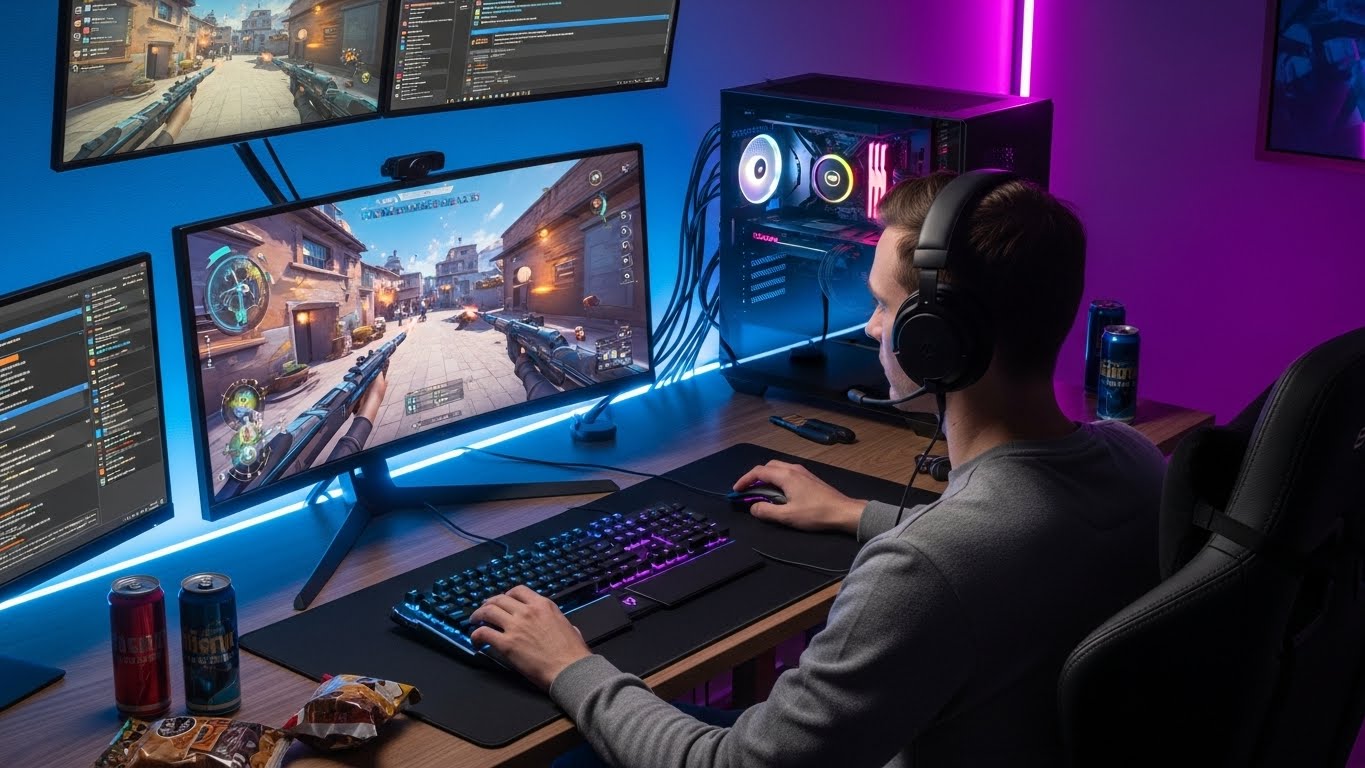
The Evolving Landscape of Gaming
Gaming has come a long way from its humble beginnings as simple arcade machines and early home consoles. Today, it stands as a multifaceted global entertainment industry that caters to all ages, interests, and skill levels. What was once considered a niche hobby has evolved into a cultural powerhouse, with games offering immersive experiences, complex narratives, and vibrant online communities. The rapid advancements in technology have opened new doors, enabling gamers to interact with their favorite games in ways that were once unimaginable. As the gaming world continues to evolve, one thing is clear: the future of gaming is boundless, and it’s only getting more exciting.
Cloud Gaming: The Future is Streaming
One of the most transformative trends in gaming is the rise of cloud gaming. With services like Xbox Cloud Gaming, Google Stadia, and PlayStation Now, players can now stream their favorite titles without the need for powerful consoles or high-end PCs. All that’s required is a stable internet connection, and gamers can access a library of games across multiple devices, including smartphones, tablets, and laptops.
Cloud gaming is breaking down the barriers of traditional gaming, making it more accessible to a wider audience. Players no longer need to invest in expensive hardware, and they don’t have to worry about upgrading their systems every few years to keep up with the latest titles. This convenience, combined with the ability to play anywhere and anytime, is revolutionizing the gaming experience, offering new opportunities for gamers all over the world.
Virtual and Augmented Reality: A New Dimension of Play
Virtual reality (VR) and augmented reality (AR) are pushing the boundaries of gaming by offering players an entirely new way to experience their favorite games. VR immerses players in fully interactive, 3D worlds where they can physically engage with their surroundings using specialized headsets and controllers. Games like Beat Saber and The Walking Dead: Saints & Sinners have set the standard for immersive VR experiences, allowing players to step inside the game and become part of the action.
On the other hand, AR blends digital elements with the real world, creating a hybrid gaming experience. Games like Pokémon Go have demonstrated how AR can transform the way players interact with their environment, turning everyday locations into a playground for adventure. The combination of VR and AR technologies has the potential to redefine the future of gaming, offering experiences that are more interactive, engaging, and immersive than ever before.
The Rise of Mobile Gaming: Play Anytime, Anywhere
The gaming industry has seen a massive shift toward mobile platforms. With smartphones becoming increasingly powerful, mobile gaming is no longer limited to casual puzzle games or retro classics. Titles like PUBG Mobile, Fortnite, and Genshin Impact have proven that mobile devices are capable of delivering console-quality gaming experiences. The accessibility of mobile gaming makes it easy for anyone to pick up and play, regardless of location.
Moreover, mobile gaming is more inclusive, catering to a wide range of genres, from action-packed shooters to role-playing games and strategy titles. The ability to play on-the-go means that gaming is no longer confined to home consoles or PCs. Whether you’re waiting for a bus or relaxing on the couch, mobile gaming lets you carry a whole library of games in your pocket, offering freedom and convenience like never before.
Esports: Gaming Becomes a Global Spectacle
Esports has seen explosive growth in recent years, transforming from a niche hobby into a global phenomenon. Professional gaming tournaments now draw millions of viewers, with games like League of Legends, Dota 2, and Counter-Strike: Global Offensive leading the charge. The competitive gaming scene has expanded beyond just tournaments—teams, coaches, analysts, and commentators have emerged, creating an entire ecosystem around competitive gaming.
Esports has also brought new career opportunities for gamers, with professional players, streamers, and content creators able to monetize their skills and audiences. Streaming platforms like Twitch have become the epicenter of the esports world, where fans can watch live gameplay, follow their favorite players, and even interact with them in real time. As esports continues to grow in popularity, it is reshaping the landscape of gaming, making it a legitimate form of entertainment and a potential career path for talented individuals.
The Influence of AI: Smarter Gameplay
Artificial intelligence (AI) is playing an increasingly important role in the development of modern games. AI has been used in gaming for years to control non-playable characters (NPCs), but today’s AI goes much further. From enemy behavior to dynamic storylines, AI is enhancing the depth and complexity of games. For instance, in games like Red Dead Redemption 2, AI is used to create realistic NPC interactions that react to the player’s choices, making the world feel alive and reactive.
AI is also being used to improve procedural generation in games, allowing for vast, ever-changing worlds to be created on the fly. This technology, used in games like Minecraft and No Man’s Sky, ensures that no two gaming experiences are ever the same, offering players endless exploration opportunities. As AI continues to evolve, it will further transform the gaming industry, enabling developers to create more dynamic, personalized, and immersive experiences for players.
Indie Games: The Power of Creativity
While AAA titles often dominate the gaming scene, indie games have been making a significant impact with their creativity, unique gameplay, and compelling storytelling. Independent developers are able to experiment with new ideas and take risks that larger studios may avoid. Games like Hades, Celeste, and Undertale have garnered critical acclaim for their innovative mechanics and emotional depth, proving that size doesn’t always equate to quality.
Indie games also tend to be more affordable and accessible, making them an excellent entry point for gamers looking for something different. With platforms like Steam, itch.io, and Epic Games Store, indie developers now have the tools to release their games to a global audience. As the indie gaming scene continues to thrive, it brings fresh perspectives to the gaming industry, showing that the future of gaming is diverse, imaginative, and full of possibility.
The Social Side of Gaming: Connecting Players Around the World
Gaming has always been a social activity, but with the rise of online multiplayer games, it has become more interactive than ever. Players from all over the world can now connect, communicate, and collaborate in real-time, forming communities around their favorite games. Titles like Fortnite, Call of Duty, and Apex Legends allow players to team up with friends or strangers to conquer challenges, complete missions, or engage in friendly competition.
The social aspect of gaming is also enhanced by streaming platforms and social media. Gamers can share their experiences, showcase their skills, and connect with like-minded individuals across the globe. With the rise of content creators and influencers, gaming has become a community-driven experience, where players can find a sense of belonging and camaraderie in a virtual world.
The Future of Gaming: What’s Next?
As technology continues to advance, the future of gaming looks incredibly promising. We can expect even more immersive experiences with the further development of VR, AR, and cloud gaming. Artificial intelligence will make games smarter, offering more dynamic narratives and reactive environments. Mobile gaming will continue to grow, providing gamers with unprecedented convenience and accessibility.
Moreover, the rise of esports and online communities suggests that gaming will become an even more integral part of global culture, with more opportunities for players to compete, collaborate, and connect. Whether it’s through new game genres, cutting-edge hardware, or new ways to engage with content, the future of gaming is an exciting frontier with endless possibilities.
Conclusion: The Boundless World of Gaming
The gaming industry is no longer just a pastime—it’s a global, multi-faceted entertainment medium that’s continuously evolving. From immersive VR experiences and mobile gaming to the rise of esports and indie innovation, gaming is becoming more accessible, inclusive, and diverse than ever before. As new technologies continue to emerge, players will have more opportunities to explore, interact, and connect in ways that were once the stuff of science fiction.
With the rapid pace of change, one thing is certain: the world of gaming has no boundaries. The only limit is our imagination, and as technology continues to push the envelope, the future of gaming promises to be an exciting adventure for everyone. Whether you’re a casual gamer or a hardcore enthusiast, there’s never been a better time to be part of this vibrant, ever-changing world.