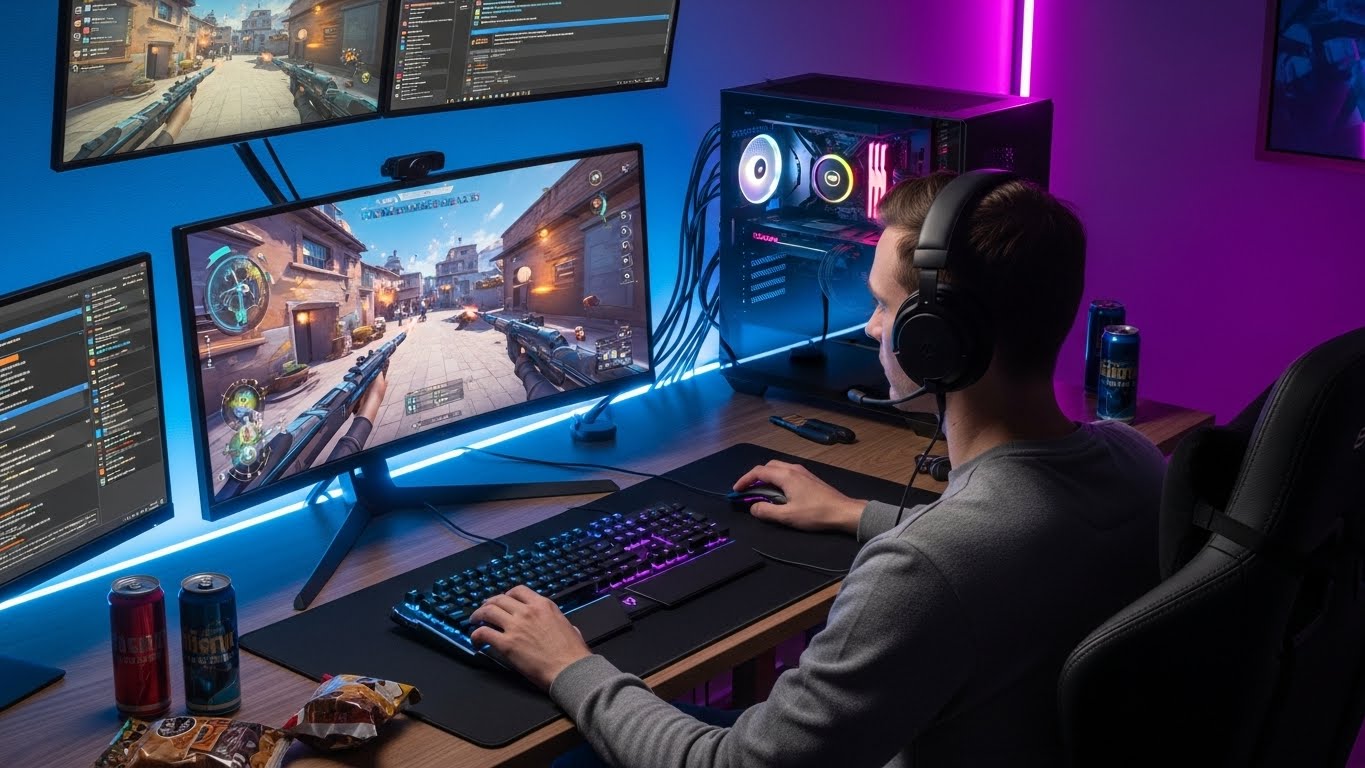
Gaming has transformed dramatically over the past few decades. From the humble beginnings of pixelated screens and simple controls to today’s hyper-realistic graphics and immersive virtual worlds, the journey of gaming reflects both technological progress and cultural shifts. In this blog, we explore the evolution of gaming, the impact it has had on society, and the trends shaping its future.
The Early Days of Gaming
The roots of modern gaming can be traced back to the 1970s and 1980s, when arcade machines and home consoles began to gain popularity. Titles like Pong and Space Invaders captivated audiences with their simplicity. Despite primitive graphics and basic sound effects, these games laid the foundation for the gaming industry by introducing players to interactive entertainment.
The rise of home consoles, such as the Atari 2600, allowed players to bring the arcade experience into their living rooms. This shift made gaming more accessible and created a new kind of cultural phenomenon, where friends and family could gather and play together. Early gaming was not just a hobby; it was a social experience that fostered community and friendly competition.
The 16-Bit Era and Storytelling
The 1980s and early 1990s marked a significant leap in gaming technology with the introduction of 16-bit consoles like the Super Nintendo Entertainment System (SNES) and Sega Genesis. These systems brought more complex graphics, improved sound, and richer gameplay experiences. For the first time, games could tell stories in ways that captivated players emotionally.
Role-playing games (RPGs) like Final Fantasy and adventure titles like The Legend of Zelda allowed players to explore vast worlds, complete quests, and develop characters. Gaming became more than just a pastime; it became an immersive narrative experience. Players were no longer simply scoring points—they were part of stories that unfolded with each choice they made.
The Rise of 3D Graphics
The mid-1990s saw another major shift in gaming: the transition to 3D graphics. Consoles like the Sony PlayStation and the Nintendo 64 enabled fully three-dimensional worlds, giving players unprecedented freedom and immersion. Games like Super Mario 64 and Tomb Raider showcased the potential of 3D environments, combining exploration with storytelling in ways that 2D games never could.
This era also introduced cinematic cutscenes and voice acting, adding layers of realism and emotional depth. Gaming started to resemble film in both narrative and presentation, creating experiences that were both interactive and visually stunning. Players could now feel like they were inside the game rather than merely observing it.
Online Gaming and Multiplayer Experiences
With the advent of the internet, gaming entered a new phase: online multiplayer. Games such as Quake, Counter-Strike, and World of Warcraft allowed players to connect with others across the globe. Multiplayer gaming brought competition and cooperation to an entirely new level, creating communities that transcended geographical boundaries.
Online gaming also introduced the concept of esports. Competitive gaming tournaments began to attract large audiences, and professional players started to gain recognition similar to traditional athletes. The social and competitive aspects of gaming became more pronounced, transforming it into a legitimate form of entertainment and sport.
The Era of Mobile Gaming
The late 2000s and 2010s brought gaming to the palms of our hands through smartphones and tablets. Titles like Angry Birds, Candy Crush, and Clash of Clans made gaming accessible to everyone, regardless of age or experience. Mobile gaming emphasized casual play, allowing users to engage in short gaming sessions anywhere, anytime.
This era also saw the rise of freemium models, where games were free to play but offered in-game purchases. While controversial, this model expanded the gaming audience exponentially and created new revenue streams for developers. Mobile gaming demonstrated that gaming was no longer confined to consoles or PCs—it could be integrated seamlessly into daily life.
Virtual Reality and Immersive Experiences
Virtual reality (VR) has revolutionized the way we experience games. With devices like the Oculus Rift, HTC Vive, and PlayStation VR, players can step directly into virtual worlds. VR games create a sense of presence that traditional screens cannot replicate, making the experience more immersive and interactive.
From action-packed shooters to meditative exploration games, VR has expanded the possibilities of gaming. It’s no longer just about visuals or gameplay mechanics; it’s about creating experiences that feel real. VR also has applications beyond entertainment, including education, training, and therapy, showing the broader potential of interactive technology.
The Impact of Gaming on Culture
Gaming has become a significant cultural force. It influences fashion, music, movies, and even language. Characters and stories from games often become part of mainstream culture, with franchises like Pokémon, Minecraft, and Fortnite achieving global recognition.
Moreover, gaming fosters creativity and problem-solving. Players develop critical thinking, strategic planning, and teamwork skills. In many ways, gaming is a reflection of modern society, providing spaces for social interaction, storytelling, and innovation. The lines between gaming and other forms of media continue to blur, highlighting its growing influence.
The Economics of Gaming
The gaming industry is now a multi-billion-dollar global enterprise. Revenue comes from game sales, in-game purchases, subscription services, and esports. Major companies like Sony, Microsoft, and Nintendo dominate the market, but indie developers also play a crucial role in innovation and creativity.
Crowdfunding platforms and digital distribution have empowered smaller studios to reach audiences directly, bypassing traditional publishers. This democratization of game development has led to diverse and experimental games that challenge conventional norms, enriching the gaming ecosystem.
Gaming Communities and Social Interaction
One of the most significant aspects of gaming today is its social dimension. Online communities, forums, and streaming platforms allow players to connect, share experiences, and collaborate. Games like Minecraft and Roblox emphasize creativity and collaboration, enabling players to build worlds together.
Streaming platforms like Twitch and video-sharing services have created a new form of social entertainment. Players can broadcast their gameplay, interact with audiences in real-time, and even monetize their content. This has given rise to gaming celebrities and influencers, further integrating gaming into mainstream culture.
The Psychology of Gaming
Understanding why people play games is as important as understanding the games themselves. Gaming provides a sense of achievement, challenge, and escape. It stimulates problem-solving, strategic thinking, and emotional engagement. Modern games are designed to be rewarding, offering progression systems, achievements, and narratives that keep players invested.
However, gaming also raises questions about balance and moderation. While gaming can be beneficial, excessive play may impact physical health, mental well-being, and social relationships. Awareness of these factors is crucial for players, parents, and educators.
The Future of Gaming
The future of gaming is poised to be even more exciting. Artificial intelligence, cloud gaming, augmented reality, and haptic feedback will continue to push the boundaries of what games can offer. Cloud gaming allows players to access high-quality experiences without expensive hardware, democratizing access to advanced games.
Augmented reality (AR) games, which blend the virtual and real worlds, will create new ways to interact with digital content. AI-driven NPCs and adaptive gameplay will make games more dynamic, personalized, and lifelike. The next decade promises an era where gaming is more immersive, social, and integrated into everyday life than ever before.
Conclusion
Gaming has evolved from simple pixelated screens to complex, immersive experiences that span the globe. It is a dynamic blend of technology, art, culture, and social interaction. Whether through storytelling, competitive esports, virtual reality, or mobile apps, gaming continues to captivate millions and shape the way we experience entertainment.
As technology advances, the line between reality and virtual worlds will blur even further. Gaming is not just a pastime; it is a reflection of human creativity, innovation, and community. For anyone passionate about gaming, the journey has been remarkable, and the future promises to be even more extraordinary.