Introduction: The Evolution of Play
Gaming has evolved from a niche pastime to one of the most influential cultural and technological phenomena of the modern era. What began as simple pixelated adventures on arcade machines has transformed into expansive worlds rendered with lifelike detail, powered by advanced artificial intelligence, and played by millions across the globe. Today, gaming isn’t just about entertainment; it’s a lifestyle, a profession, a social network, and even an art form.
To truly understand the power of gaming, one must look at its journey — from the birth of Pong to the immersive realities of virtual worlds. The rise of gaming tells a story not only of technological progress but also of human creativity, competition, and connection.
The Birth of Video Games
The story of gaming begins in the 1950s and 1960s when computers were still massive machines used primarily for research and military purposes. Early engineers and programmers, driven by curiosity and creativity, began experimenting with interactive programs. One of the first known examples was “Tennis for Two,” created by William Higinbotham in 1958. It was a simple tennis simulation displayed on an oscilloscope, but it captured the imagination of everyone who saw it.
By the 1970s, video games began to make their way into arcades and homes. “Pong,” developed by Atari in 1972, became the first commercially successful video game. Its concept was simple — two paddles, one ball — but it laid the groundwork for an industry that would eventually surpass movies and music in revenue.
The success of arcade games such as “Space Invaders,” “Pac-Man,” and “Donkey Kong” turned gaming into a global craze. Kids lined up with quarters in their pockets, and the neon glow of arcade halls became the heartbeat of youth culture.
The Home Console Revolution
While arcades were booming, innovators began envisioning a way to bring the arcade experience home. The late 1970s and early 1980s saw the rise of home consoles like the Atari 2600, Intellivision, and ColecoVision. These systems allowed players to experience gaming without leaving their living rooms.
The 1980s also introduced iconic franchises that still shape the industry today. Nintendo’s “Super Mario Bros.” redefined what a platform game could be, while “The Legend of Zelda” introduced players to a vast, adventurous world. Sega’s “Sonic the Hedgehog” brought speed and attitude, setting up a legendary rivalry between Nintendo and Sega that would dominate the early 1990s.
This era wasn’t without challenges. The video game crash of 1983 nearly destroyed the industry, caused by market oversaturation and low-quality games. But the arrival of the Nintendo Entertainment System (NES) in 1985 revived interest and restored trust in gaming. With stricter quality control and innovative marketing, Nintendo rebuilt the industry from the ground up.
The Rise of PC Gaming
While consoles ruled the living room, personal computers opened new doors for gamers. PC gaming offered flexibility, complexity, and creativity. Titles like “Doom,” “Quake,” and “Half-Life” pushed the boundaries of graphics and gameplay. Strategy games like “Age of Empires” and “Civilization” offered deep, cerebral experiences that demanded planning and foresight.
The PC also became a breeding ground for modders — fans who created custom content and even entirely new games from existing ones. Iconic games such as “Counter-Strike” and “Dota” began as mods, proving how player creativity could reshape the industry.
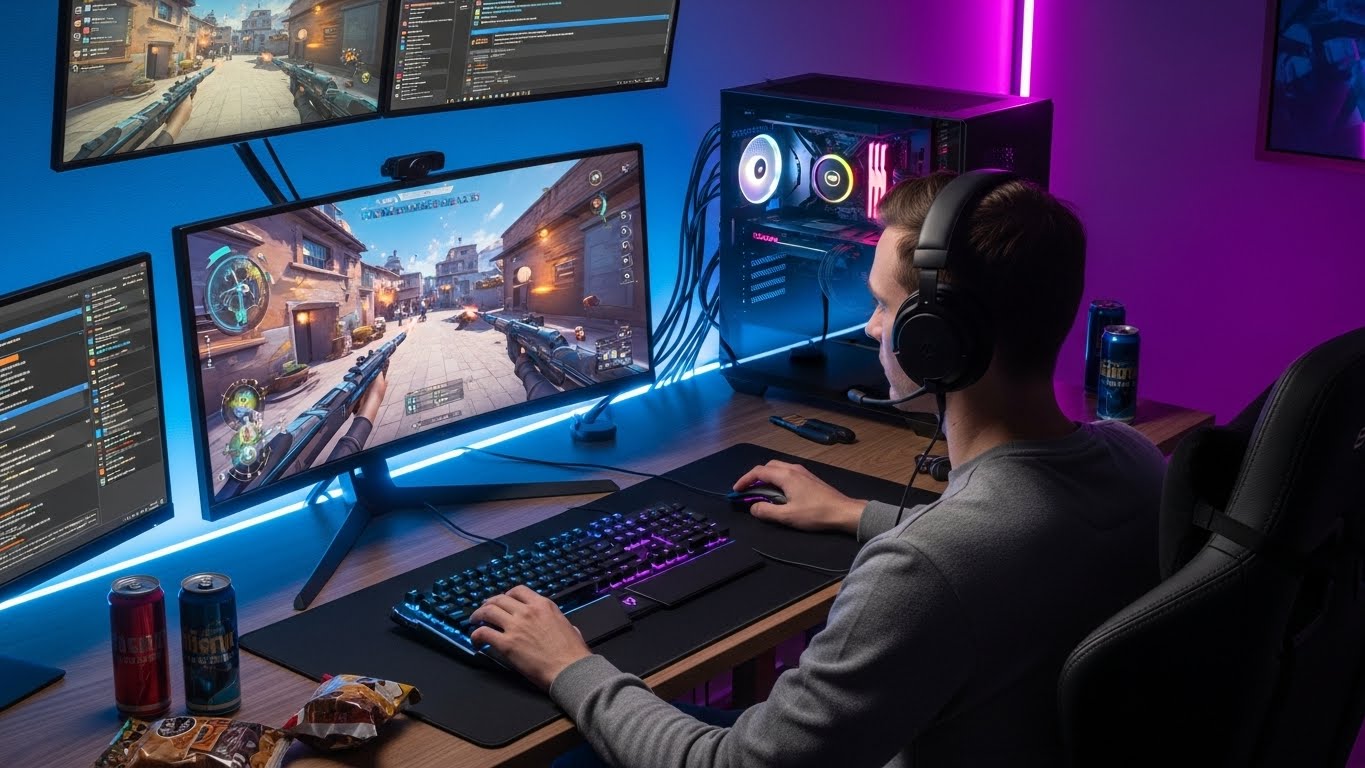
With the advent of online multiplayer in the late 1990s, PC gaming became a social phenomenon. LAN parties evolved into global networks, and online competition gave rise to the first wave of professional gaming tournaments.
The 3D Revolution and the Birth of Modern Gaming
The mid to late 1990s marked one of the most significant leaps in gaming history: the transition from 2D to 3D graphics. The Sony PlayStation, Nintendo 64, and Sega Saturn ushered in a new era where players could explore vast, three-dimensional worlds.
Games like “Final Fantasy VII,” “Metal Gear Solid,” and “The Legend of Zelda: Ocarina of Time” became cultural milestones, combining cinematic storytelling with interactive gameplay. For the first time, video games could evoke real emotion and tell stories on par with films.
This period also marked the rise of genres that dominate today’s market — first-person shooters, open-world adventures, and role-playing games (RPGs). Developers began focusing not only on gameplay mechanics but also on narrative depth, character development, and world-building.
The Online Era: Connecting the World Through Play
The early 2000s brought another revolution: the rise of online gaming. With the expansion of the internet, gaming transformed from a solitary experience into a shared, global phenomenon. Titles like “World of Warcraft” redefined what online worlds could be, drawing millions into its immersive fantasy realms.
Microsoft’s Xbox Live service, launched in 2002, set a new standard for online multiplayer on consoles. Suddenly, players could compete, chat, and form friendships with people from around the world — all from their living rooms.
Games like “Halo 2,” “Call of Duty,” and “Counter-Strike” turned competitive multiplayer into a mainstream form of entertainment. The concept of clans, rankings, and leaderboards fueled a growing esports movement.
Online gaming didn’t just change how people played — it changed how they socialized. For many, online games became digital meeting spaces, places to hang out, talk, and collaborate.
Mobile Gaming: Power in Your Pocket
The rise of smartphones in the late 2000s brought gaming to the fingertips of billions. Games like “Angry Birds,” “Candy Crush Saga,” and “Clash of Clans” proved that you didn’t need a console or a PC to enjoy great gameplay. Mobile gaming opened the industry to a whole new audience, from children to grandparents.
What makes mobile gaming special is its accessibility. A phone is something everyone carries, and mobile games are designed for short, convenient play sessions. Yet the technology behind them has grown so advanced that mobile titles like “Genshin Impact” and “PUBG Mobile” rival console games in graphics and depth.
Today, mobile gaming accounts for nearly half of the global gaming market, proving that convenience and creativity can coexist.
Esports: The New Age of Competition
Gaming has always had a competitive spirit, but esports transformed that spirit into a global industry. What began as small LAN tournaments in basements and college halls evolved into massive arenas filled with cheering fans.
Games like “League of Legends,” “Dota 2,” “Fortnite,” and “Counter-Strike: Global Offensive” now host international tournaments with multi-million-dollar prize pools. Players have become celebrities, teams have turned into organizations, and fans follow their favorite players like sports stars.
Streaming platforms such as Twitch and YouTube Gaming have turned spectatorship into a key part of gaming culture. People now tune in not only to watch tournaments but also to follow personalities, learn strategies, and engage with communities.
Esports represents more than just games; it’s a fusion of technology, skill, and entertainment that has redefined what competition can look like in the digital age.
Storytelling in Games: Emotion Meets Interaction
As gaming matured, so did its ability to tell stories. Developers realized that games could be more than fun — they could be meaningful, emotional, and thought-provoking.
Games like “The Last of Us,” “Red Dead Redemption 2,” and “Life is Strange” show how narrative and gameplay can merge to create experiences that resonate deeply. Unlike films, where the audience watches passively, games invite players to participate in the story, making choices that affect outcomes and relationships.
This interactivity creates a unique kind of empathy. When players make decisions that impact characters they care about, they feel responsible for what happens. It’s storytelling on an entirely different level — one where the audience becomes part of the narrative itself.
Virtual Reality and the Future of Immersion
Virtual reality (VR) represents the next frontier of gaming. With devices like the Oculus Quest, PlayStation VR, and Valve Index, players can step inside digital worlds rather than simply view them.
VR offers a level of immersion never before possible. Whether it’s exploring alien planets, battling in medieval duels, or painting in 3D space, VR transforms the way players experience games. Augmented reality (AR), as seen in “Pokémon Go,” blends the digital with the real, turning everyday surroundings into part of the adventure.
While still evolving, VR and AR are shaping the future of interactive entertainment. As technology advances, we can expect even more lifelike environments, intuitive controls, and emotionally engaging experiences.
Gaming Communities: The Heartbeat of the Industry
One of gaming’s greatest strengths is its sense of community. From small groups of friends playing together to massive online fandoms, gaming has a way of bringing people together across borders, languages, and backgrounds.
Communities form around games, genres, and even individual creators. Forums, social media, and streaming platforms serve as gathering places where fans share strategies, art, and experiences. For many, gaming communities are a source of friendship, creativity, and belonging.
However, as with any large social space, online gaming communities also face challenges such as toxicity, harassment, and inclusivity. Developers and players alike are working to make gaming a more welcoming environment for everyone. The ongoing effort to build positive communities reflects gaming’s evolution from a pastime into a social force.
The Business of Gaming: Billions in Pixels
Gaming is no longer just a hobby — it’s one of the most profitable industries in the world. With billions of players and multiple platforms, gaming generates more revenue than movies and music combined.
Major studios invest millions in blockbuster titles, while indie developers continue to prove that creativity and innovation can shine without massive budgets. The rise of digital distribution platforms has made it easier for small teams to reach global audiences.
Subscription models, downloadable content (DLC), and in-game purchases have reshaped how games are monetized. While these models have sparked debates about fairness and consumer rights, they also show how flexible and dynamic the gaming economy has become.
The Psychological Impact of Gaming
Gaming’s influence extends beyond entertainment — it affects the mind and emotions. Studies show that gaming can improve problem-solving skills, spatial awareness, and teamwork. Multiplayer games often foster collaboration and communication.
However, like any powerful medium, gaming must be approached responsibly. Excessive gaming can lead to addiction, isolation, and burnout. The key is balance — understanding that gaming is most enriching when it complements rather than replaces other aspects of life.
Games can also be therapeutic. Titles designed for mental health awareness or relaxation help players manage anxiety and stress. For some, gaming provides an escape; for others, it’s a way to connect or even heal.
The Art of Game Design
Behind every game lies the artistry of design. Game developers are storytellers, engineers, artists, and psychologists all in one. Crafting a successful game requires balancing mechanics, aesthetics, and emotion.
Every element — from sound design to level architecture — serves a purpose. A good game teaches the player through play itself, without lengthy explanations. It engages curiosity, rewards exploration, and adapts to the player’s choices.
The line between game design and traditional art has blurred. Museums now host exhibitions celebrating video games as cultural artifacts, acknowledging them as a legitimate form of artistic expression.
The Future of Gaming
What comes next for gaming? The possibilities are endless. Artificial intelligence will continue to enhance realism and interactivity, creating smarter, more adaptive worlds. Cloud gaming promises to make high-quality gaming accessible to anyone with an internet connection, eliminating the need for expensive hardware.
We may see more integration between games and other aspects of life — from education to fitness to social interaction. Gaming will continue to evolve as both a creative and technological frontier, shaping how we work, learn, and play.
Conclusion: Gaming as a Mirror of Humanity
From its humble beginnings to its current global dominance, gaming has always reflected the human desire to explore, compete, and create. It’s more than a pastime — it’s a language, an art form, and a bridge between people and cultures.
Gaming teaches us that play is not just for children. It’s a fundamental part of being human — a way to imagine, experiment, and connect. Whether you’re guiding a hero through a mythical land, solving puzzles in a mysterious world, or simply sharing laughter with friends online, gaming reminds us that joy, challenge, and discovery can all exist in the same space.
As technology continues to evolve, so too will the world of gaming. But one thing will remain constant: the thrill of pressing “Start” and stepping into another world.